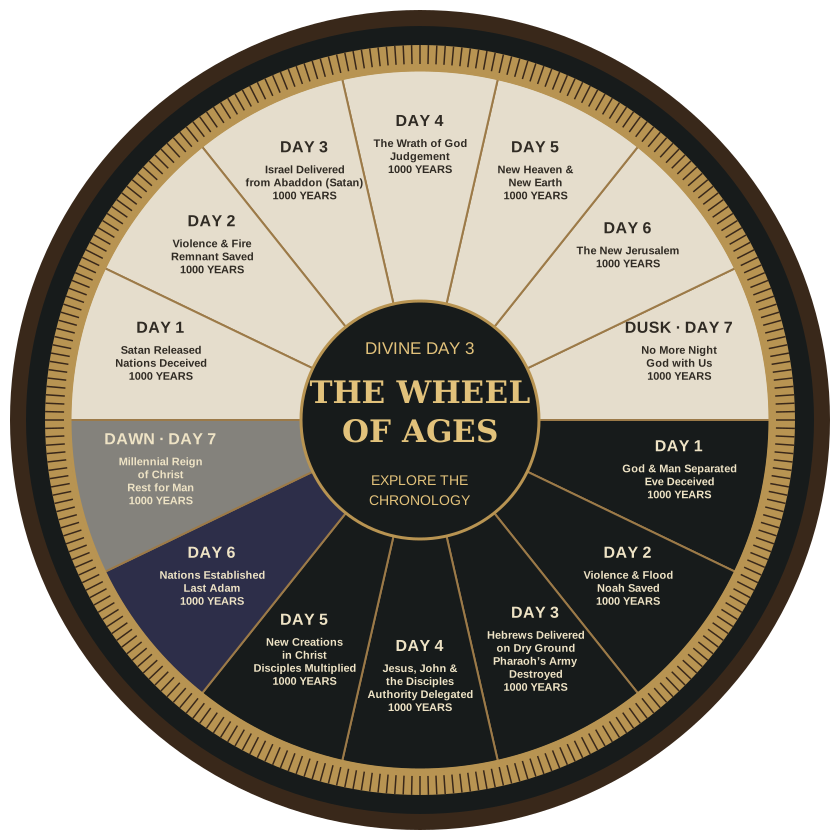
 THE WHEEL OF AGESDISCOVERING GOD'S PLAN THROUGH TIMEStudy Guide
GOD’S PLAN REVEALED THROUGH TIME
The Pattern in Genesis reveals History in Advance.
Jesus' return may be closer than we realize.
The Wheel of Ages is a Scripture-centered study of the binary, cyclical, and sevenfold order first revealed in Genesis. It traces that order through Creation, covenant history, the Tabernacle, the Feasts, the ministry of Christ, and Revelation—showing one divine purpose moving through time and space toward restoration and God dwelling with humanity.
BEGIN WITH THE PURPOSE
From God Alone to God with Us
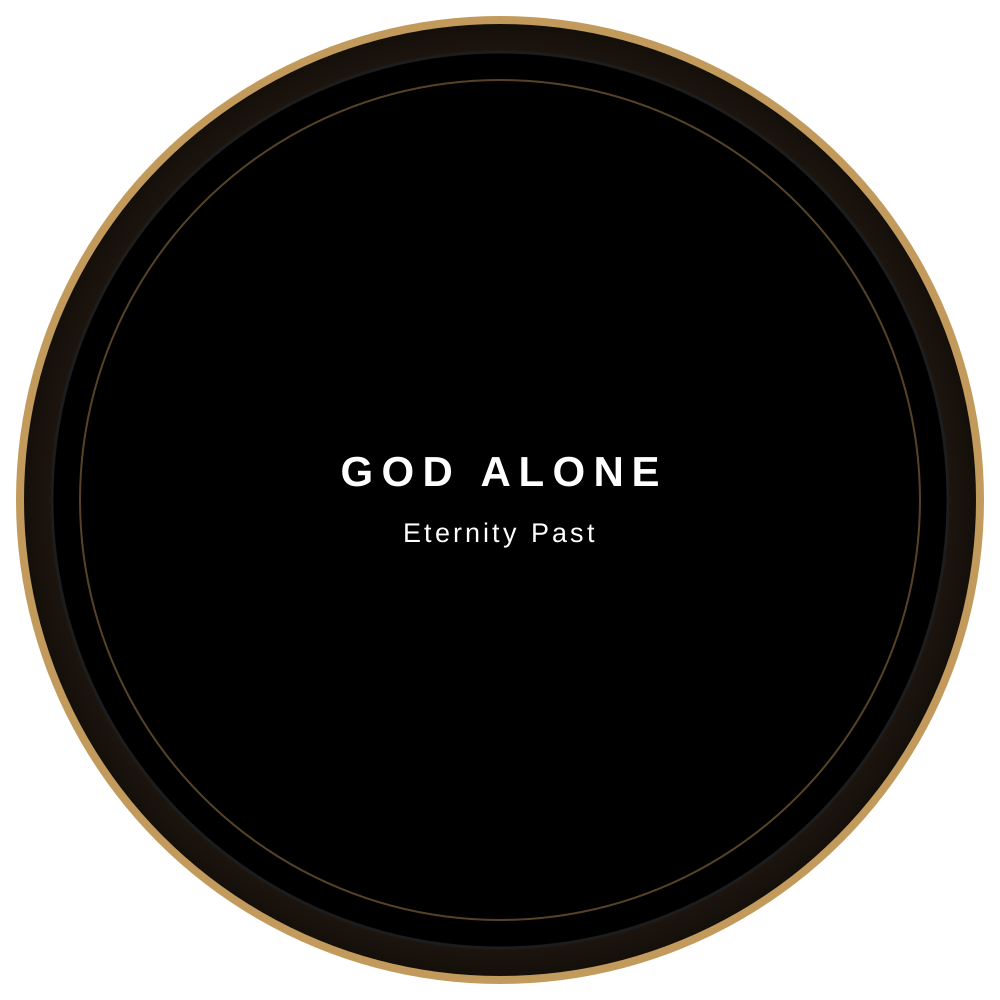
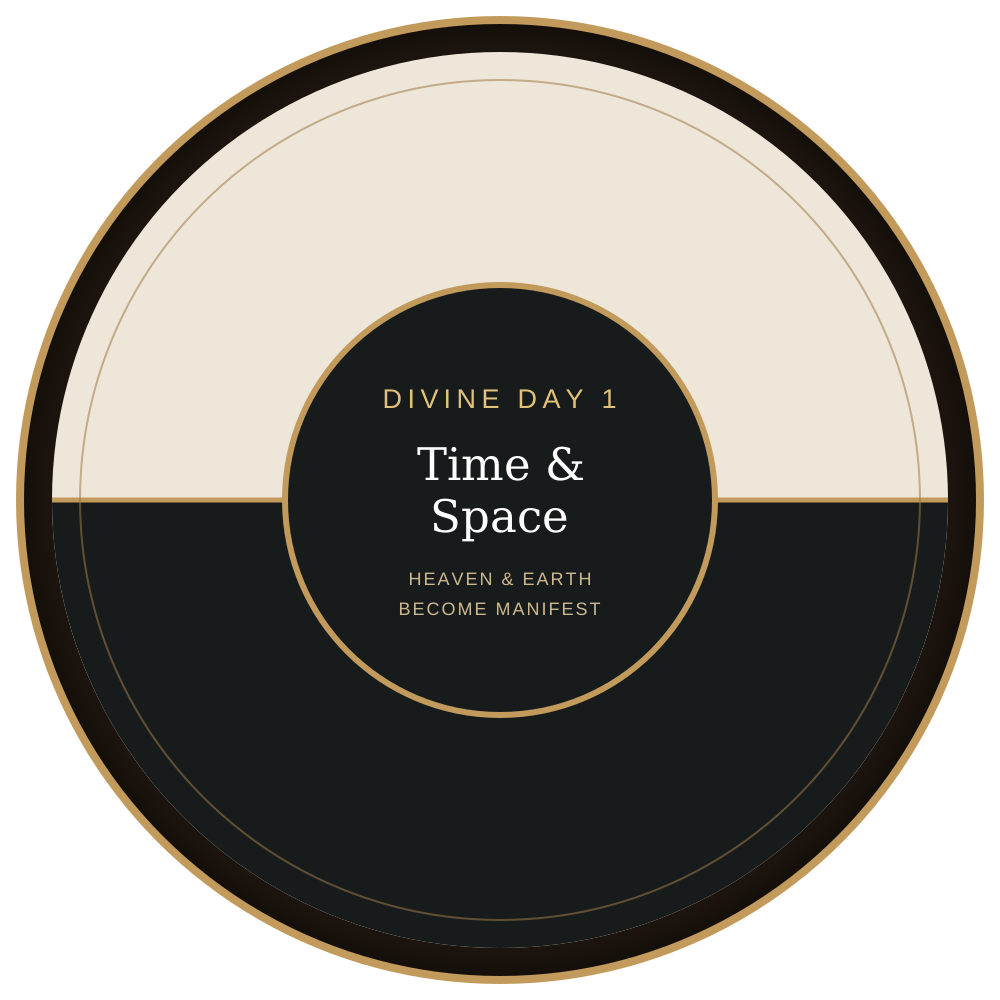
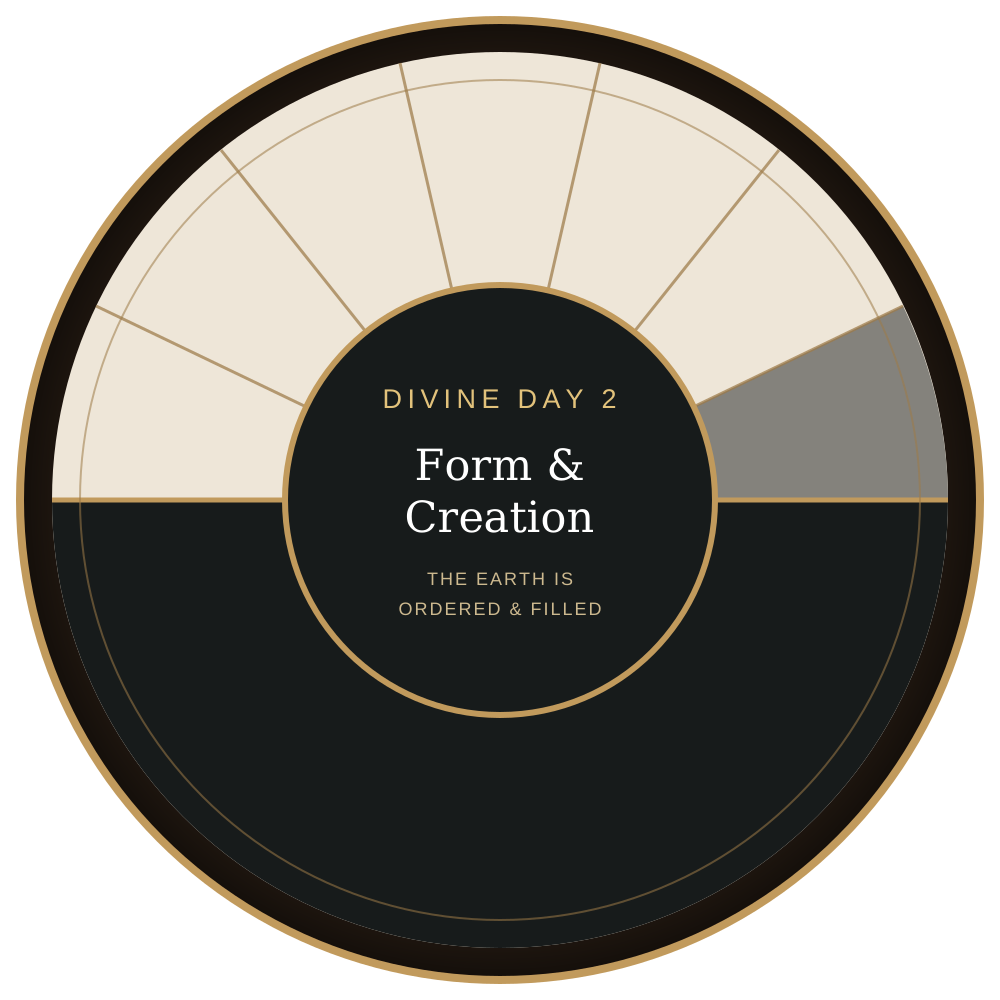
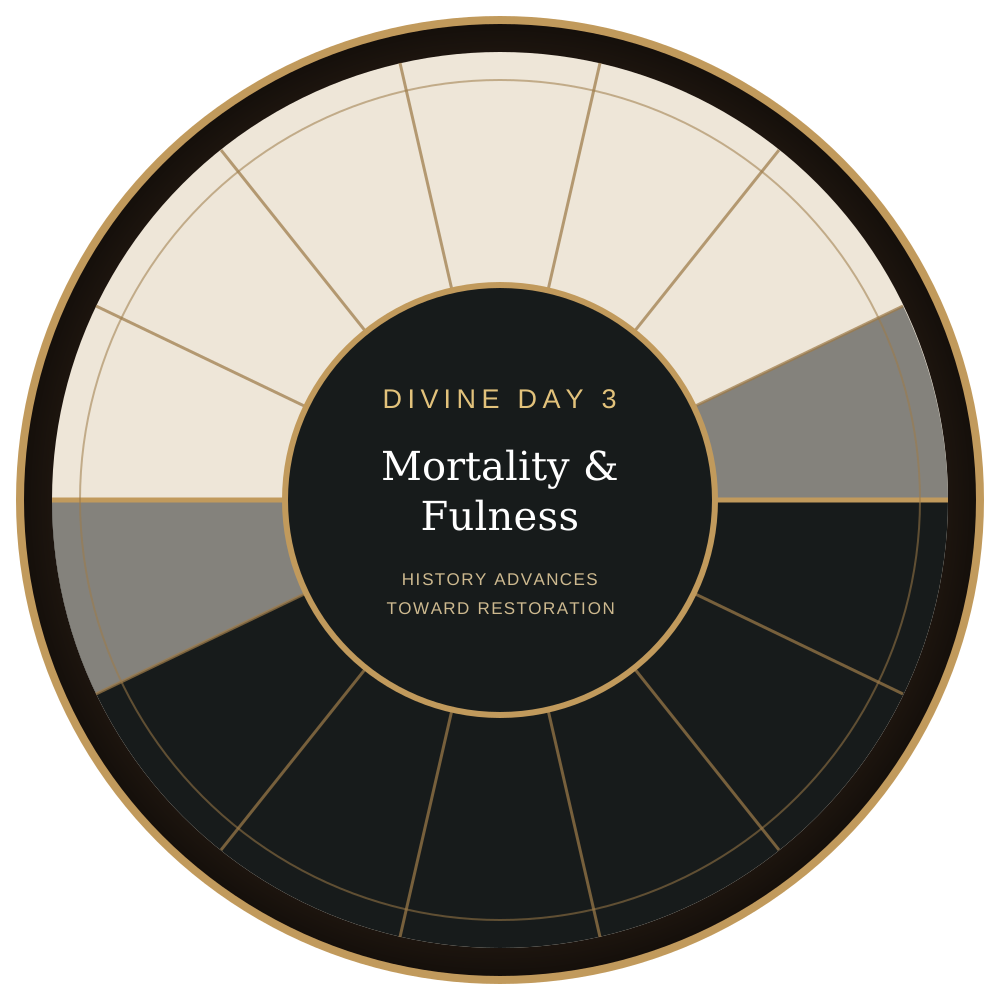
Genesis begins with God creating heaven and earth; Revelation looks toward God dwelling with His people. Between those passages, this site follows a movement from creation through ordering, mortal history, and restoration. Time & Space introduces the beginning of the created world. Form & Creation examines the earth being ordered and filled. Mortality & Fullness follows the consequences of the Fall and the hope of renewed fellowship.
The Wheel of Ages organizes these movements into three proposed Divine Days, each advancing God’s purpose from Evening toward Morning. Begin with the individual studies below to examine the texts and the interpretation built upon them.
Creation supplies the vocabulary
The Repeating Order
Genesis moves through light and separation, divided waters, dry ground and seed, appointed lights, multiplying life, humanity’s dominion, and rest. These actions give the study a vocabulary for comparing later passages. For example, the dry ground of the third Creation Day invites comparison with Israel’s passage through the sea on dry ground. The resemblance is worth examining in its biblical context.
The Repeating Order introduces the site’s sevenfold comparisons. Follow the same stage through Creation, history, the Tabernacle, the feasts, and the proposed future sequence, checking each connection against its supporting passages.
Genesis 1:3–2:3 · Exodus 14:21–22
Explore The Repeating Order- 1Light & darkness
- 2The expanse
- 3Earth & seed
- 4Lights & seasons
- 5Life in sea & sky
- 6Animals & mankind
- 7Rest
The seven ages of mortal history
Ages Present
The Wheel of Ages follows seven featured events within its proposed reading of history: the Fall of Man, the Flood, the Red Sea crossing, the witness of Jesus, John and the disciples, new creations in Christ, the nations and the Last Adam, and the millennial reign of Christ. Each event is studied alongside its corresponding Creation Day, Tabernacle article, and appointed feast. The progression moves from humanity’s separation from God toward restoration and rest under Christ’s reign.
These event correspondences and their placement within seven millenniums belong to the site’s interpretive framework. The individual day studies provide the passages and reasoning behind each connection, allowing you to examine the proposed pattern rather than accepting the chronology from the event titles alone.
Genesis 1:3–2:3 · Revelation 20:1–6
Explore Ages Present- 1The Fall of Man
- 2The Flood
- 3The Red Sea Crossing
- 4Jesus, John & the Disciples
- 5New Creations in Christ
- 6The Nations & the Last Adam
- 7The Millennial Reign of Christ
The pattern becomes a dwelling place
The Tabernacle
God commands Israel to make a sanctuary so that He may dwell among them. The site follows the Tabernacle’s articles from the altar and laver through the Holy Place to the mercy seat and Ark. Its diagrams compare this arrangement with Christ’s humiliation and exaltation, and with the believer’s approach to God.
Exodus supplies the sanctuary and its instructions; Hebrews discusses Christ’s priesthood and the heavenly significance of the earthly sanctuary. The detailed seven-stage journeys shown here are the Wheel of Ages’ synthesis of those passages. Study the full page to distinguish the biblical descriptions from the proposed pattern connecting them.
Exodus 25:8–9 · Hebrews 9:1–14
Explore The Tabernacle- 1Brazen Altar
- 2Brazen Laver
- 3Table of Shewbread
- 4Golden Lampstand
- 5Altar of Incense
- 6Mercy Seat
- 7Ark of the Covenant
The pattern unfolds in appointed time
God’s Holidays
Leviticus 23 describes the appointed feasts, from Passover and Unleavened Bread through Firstfruits, Pentecost, Trumpets, Atonement, and Tabernacles. The site compares their sequence with Creation and explores their significance in Christ: the Passover sacrifice, the firstfruits of resurrection, and the hope of God dwelling with His people.
The full study includes the feast candles, scriptural references, upcoming dates, and alternate calendar assumptions. The countdown below uses the same fixed Hebrew calendar and weekly-Sabbath Firstfruits interpretation that the page selects by default. Its civil-day estimate is distinct from a precise sunset countdown or a claim about ancient calendar observations.
Leviticus 23 · 1 Corinthians 5:7 · 1 Corinthians 15:20
Explore God’s Holidays- 1Passover
- 2Unleavened Bread
- 3Firstfruits
- 4Pentecost
- 5Trumpets
- 6Atonement
- 7Tabernacles
Completion opens into restoration
The Jubilee
Leviticus 25 commands Israel to count forty-nine years and sanctify the fiftieth as Jubilee. Its provisions concern return to inheritance, redemption, release from specified service, and rest for the land. The full study explains these boundaries and considers how the promise of liberty relates to Jesus’ proclamation of the acceptable year of the Lord.
The page also examines Ezekiel’s dated vision as a possible historical Jubilee anchor. The inference that Ezekiel’s vision falls in a Jubilee year is worth considering: its date at the beginning of the year, on the tenth day of the month, invites comparison with the Jubilee proclamation on the Day of Atonement. If one historical Jubilee can be securely identified, a continuous fifty-year count would allow us to trace every preceding and following segment associated with Jubilee in God’s count. This is the reasoning behind the study’s proposed historical anchor; identifying the anchor remains an inference to examine against the text.
Leviticus 25:8–13 · Ezekiel 40:1 · Luke 4:16–21
Explore The JubileeA YEAR SET APART
The larger pattern meets the work of Christ
The Divine Week
The Divine Week compares Passion Week with Creation’s movement from light to completed work and rest. The page traces Jesus’ entrance, cleansing of the Temple, teaching, crucifixion, burial, and resurrection within the site’s proposed seven-day arrangement. It also examines the sign of Jonah and the requirement of three days and three nights central to this interpretation.
The study presents AD 28 as its leading crucifixion candidate and discusses the assumptions used to reconstruct that week. The exact date and the placement of events within Creation-Day correspondences remain interpretive conclusions. Read the chronology and supporting passages together, rather than treating the home-page overview as proof of the reconstruction.
Matthew 12:40 · John 12:23–24 · Genesis 2:1–3
Explore The Divine Week- 1The King enters Jerusalem and the Temple
- 2The Temple is cleansed and worship is separated from corruption
- 3The promised Seed prepares to fall into the ground
- 4Jesus is crucified as the sun is blackened
- 5Jesus proclaims to the spirits in prison
- 6The Last Adam obtains the keys and restores man’s lost dominion
- 7Jesus rises from the dead
The promise continues through generations
The Covenant Jubilee
The Covenant Jubilee compares the genealogies and covenant lives recorded in Genesis with the sevenfold pattern. It follows the promise through the patriarchs and examines how calling, testing, inheritance, and continuation appear within their lives.
The covenant promise belongs to the biblical account; the arrangement of generations and life stages into a Jubilee pattern belongs to this study’s interpretation. The full page makes room to inspect each connection, including proposed name meanings and their uncertainties, while following the continuing purpose of blessing and fellowship with God.
Genesis 5:1–24 · Genesis 12:1–3 · Genesis 26:2–5
Explore The Covenant Jubilee- 1Abraham
- 2Isaac
- 3Jacob
- 4Joseph
- 5Moses
- 6David
- 7Jesus
Rest under the reign of Christ
The Coming Millennium
Revelation 20:1–6 describes Satan’s restraint and the saints reigning with Christ for a thousand years. The Wheel of Ages identifies that reign with the seventh millennium of its chronology and describes it as the Dawn between the Evening of mortal history and the Morning of fulfillment. The full study considers righteous government, renewed creation, and the relationship between mortal life and resurrected saints.
The thousand-year reign is described in Revelation; its placement within this larger chronology is the site’s interpretation. The proposed continuing Morning sequence goes beyond conventional premillennial teaching. Explore the supporting passages and the stated distinctions before drawing conclusions about dates or the duration of later events.
Revelation 20:1–6 · Hebrews 4:9–11 · Isaiah 11:1–10
Explore The Coming Millennium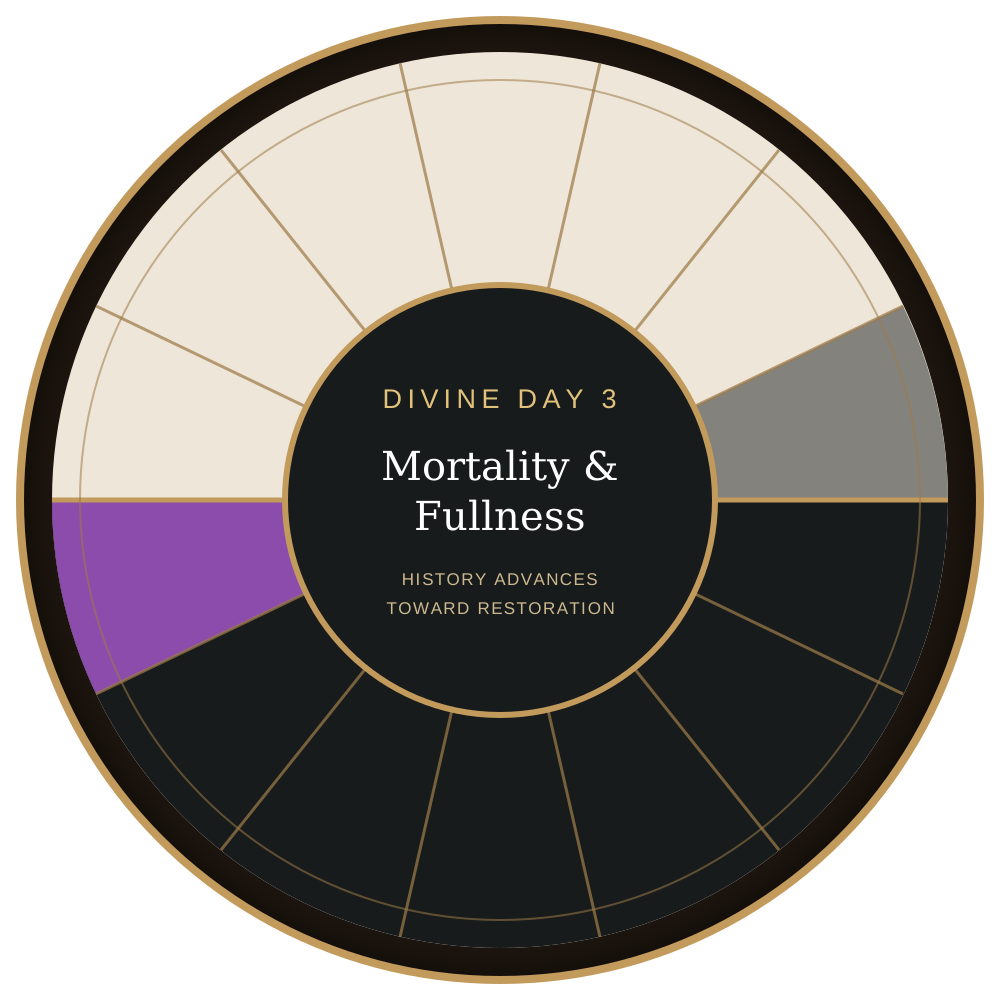
The purpose reaches its fulfillment
Revelation
Revelation culminates in a new heaven and earth, the New Jerusalem, God dwelling with His people, and a realm with no more night. The site explores the book through a proposed mirrored structure: passages are paired around a center and grouped into seven sets of seven, followed by a Jubilee correspondence. A mirrored structure, or chiasm, places related ideas on either side of a central point.
This arrangement is the Wheel of Ages’ reading of the book, rather than an outline explicitly supplied by Revelation. The page lets you examine each pairing against the text and consider how the vision of final restoration answers the themes introduced in Genesis.
Revelation 21:1–5 · Revelation 22:1–5
Explore Revelation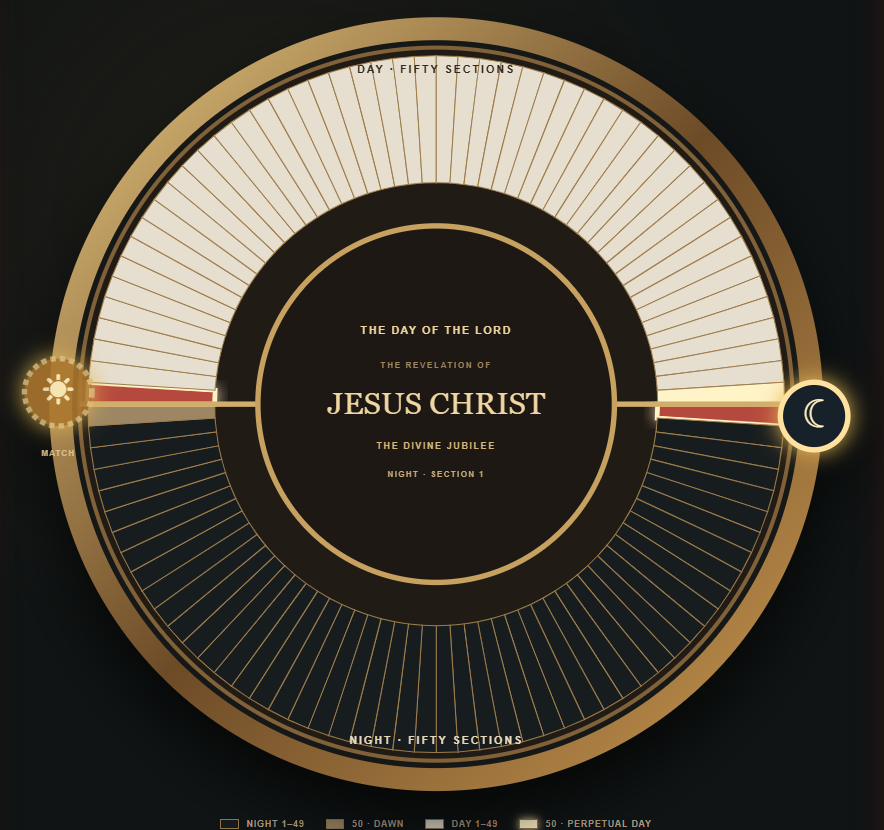
BRING THE STUDIES TOGETHER
The Wheel of Ages
Explore the proposed chronology through Divine Days, Millenniums, Centuries, Years, Weeks, and Days. Select a period to read its Key Events, open the integrated KJV Bible reader to examine supporting passages, and collect verses or notes into a study. Changing scale lets you consider both the larger movement and the individual events within it.
The wheel is an instrument for exploring the interpretation developed across these pages. Its placement of historical and anticipated events reflects that framework and its stated assumptions. Begin at the present date, then return to the individual studies whenever you want to examine a connection more closely.
Open The Wheel of AgesStudy GuideThe Power of SevenSources and Methodology